


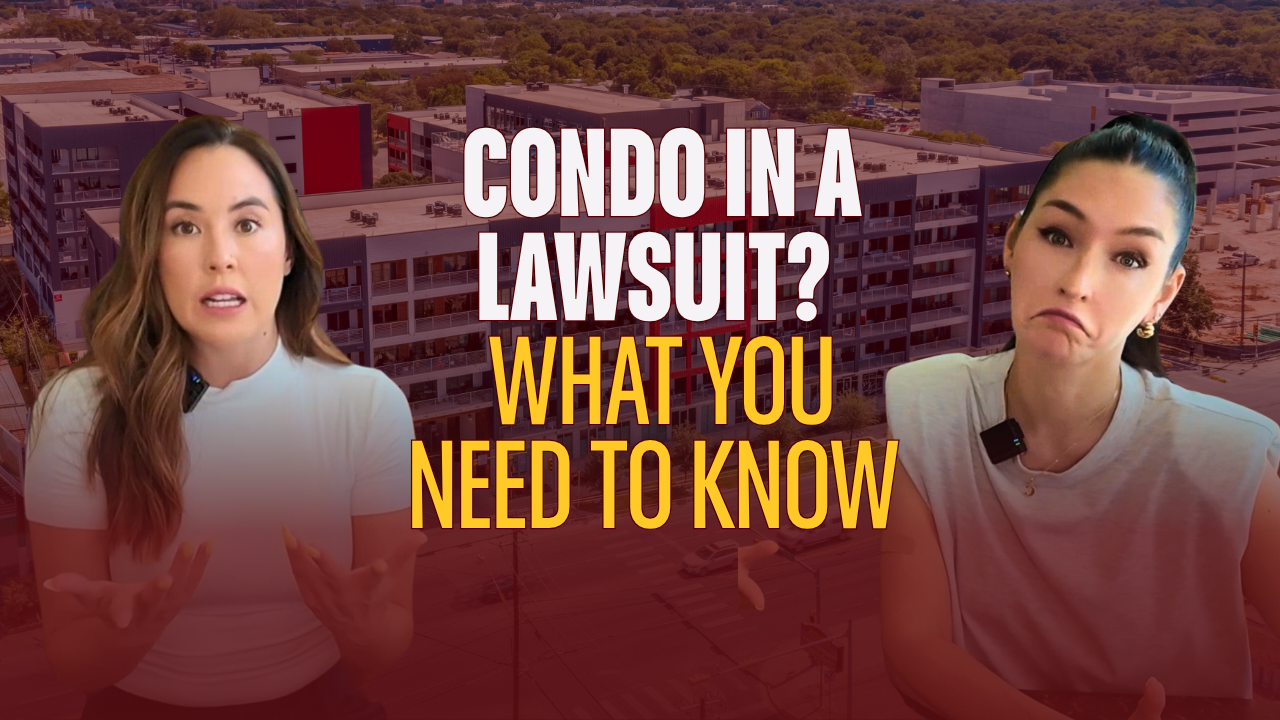
Litigation is the fastest way to scare buyers off an Austin condo. That is exactly why the math can work.
If you're weighing whether to buy a condo with pending litigation, wondering how to sell one, or you're already a homeowner whose HOA is suing the developer, this covers what actually happens: financing (including non-warrantable condo loans), how long litigation really takes, who decides on repairs, special assessments, and the discount you can expect against the risk you're taking on. We're talking through this using a real Austin building, Public Lofts, as the example throughout.
This is Callie Gaylord, my partner and the person who runs the day-to-day of my business. She bought a condo at Public Lofts on South Congress while it was in an active lawsuit against the developer. That lawsuit has since settled, and the reconstruction is underway. I've been on a few sides of this myself: I've owned in a building that went through litigation, I currently own a condo where the HOA voted on whether to sue our developer (I voted against it), and we've sold several units at Public Lofts to buyers navigating exactly what you're about to read.
My condo is in a lawsuit. What do I need to know?
Start with the documents, not your gut reaction. Callie's fiancé pulled the engineering reports, read the lawsuit filings, and called the attorneys representing the HOA directly for additional materials. Once every problem is laid out on paper, the decision gets simple: you're either comfortable with what you're seeing or you're not. That process is the same whether you're already living in one or deciding whether to buy in.
Can I even get a mortgage on a condo that's in a lawsuit?
Yes, and this is the part most people don't know yet. A condo with active litigation typically becomes what's called non-warrantable, meaning it fails Fannie Mae or Freddie Mac's guidelines, and litigation is one of the specific triggers for that status. That locks out standard conventional loans. What it doesn't lock out is a good loan.
We work with lenders who specialize in exactly this and offer genuinely competitive interest rates on non-warrantable condos, with as little as 5 percent down for a first-time buyer and 10 percent for an owner-occupant. Products like this simply weren't available a few years ago. The financing on a condo like this used to mean cash only or a steep down payment through a portfolio lender. That's no longer the whole story, but you need a realtor and a lender who actually work in this space to find it. This is exactly where the right resources make the difference between walking away and getting a great deal.
One clarification worth knowing before you talk to a lender: a standard 5/1 ARM (a common structure in this space) holds a fixed rate for the first five years, then adjusts annually after that. It's easy to remember it backward. The exact structure varies by lender, so confirm the specifics on any loan like this directly rather than assuming.
Should I actually buy a condo with an active lawsuit?
It depends entirely on your timeline, not just the discount. These properties typically sell below market value because of the litigation, and that upfront equity capture is real. But recovery doesn't happen the moment a lawsuit settles. Values can take years to rebound even after reconstruction starts. If you're planning to flip, this isn't the deal. If you know you're staying put for a while, and the space genuinely fits your life, the math can work strongly in your favor.
My HOA is talking about suing the developer. What should I expect?
Expect years, not months. If a building is only now voting on whether to sue, as mine was, you're potentially five or more years from a settlement, and repairs don't start until after that. I voted against pursuing our lawsuit specifically because of how long that stigma follows a property. There's no universal right answer here. It depends on how long you plan to stay, and how much uncertainty you can live with in the meantime.
Once a lawsuit settles, who decides what gets fixed and in what order?
Not the residents, and that's a good thing when the HOA is engaged. Public Lofts had a full reconstruction report from Rimkus, a structural engineering firm, laying out priority one, priority two, priority three, with timelines attached to each. Owners don't get to reshuffle the order. What you can control is asking to see that report before you buy, so you know exactly what's coming and when.
What is a special assessment, and will I have to pay one?
A special assessment is a separate charge on top of your regular HOA dues, levied when reserves or the operating budget can't cover something, a roof, a structural repair, whatever it is. After a lawsuit specifically, it can also show up if the settlement doesn't fully fund every item the engineering report requires, since once that report is issued, every item on it has to be addressed. Whoever owns the unit at closing is typically responsible for paying off any existing special assessment before a sale goes through, which is exactly why you ask this question before you make an offer, not after.
Why is the HOA fee so high, and will it stay that way?
Ask what's actually driving the number before assuming mismanagement. At Public Lofts, the fee climbed because of insurance, not a random shortfall. Once claims from years of repairs started falling off the books, dues dropped 25 percent this year. That pattern tracks with something bigger than one building: insurance costs for older multifamily properties rose nationally after the 2021 partial collapse of a condo tower in Surfside, Florida, which pushed insurers toward stricter inspection and underwriting standards industry-wide. If an HOA fee looks high, insurance is often the actual reason, and it's a number that can come back down once claims settle.
Is this actually a good time to buy into a deal like this?
Based on what myself and Callie have seen, yes, and the comps make the case better than any argument I could write. At Public Lofts, similar-sized units a block away, in buildings with no litigation history, are selling for roughly 40 percent more for less space. That gap isn't about the condo itself. It's the stigma of the word "lawsuit" attached to the listing, and stigma is temporary in a way that a structural problem isn't.
Where you land in the timeline changes your leverage. If a building is already mid-litigation, ask specifically how much longer until the case resolves; that timeline tells you how long you're holding before the stigma discount starts to close. If a building is only just entering litigation, that's actually where a buyer has the most negotiating room: sellers at that stage are often motivated and anxious to move before things get worse in their mind, and a confident, well-informed buyer can push for a real discount up front.
What should I ask before I make an offer?
Ask if the building is warrantable. Ask for the reserves and a copy of recent HOA meeting minutes. Ask directly about any existing or pending special assessment, and the amount. And ask whether your agent has actually sold in this specific building before, not just whether they'll take the listing. That last one matters more than it sounds: an agent who knows the building's real history can push back on inflated concerns and get you a better price; one who doesn't may talk you out of a deal that was never as risky as it looked.
If you're weighing a purchase like this in Austin, or you're already in one, I'd love to talk it through with you.
Thinking about your next move in Austin?


