


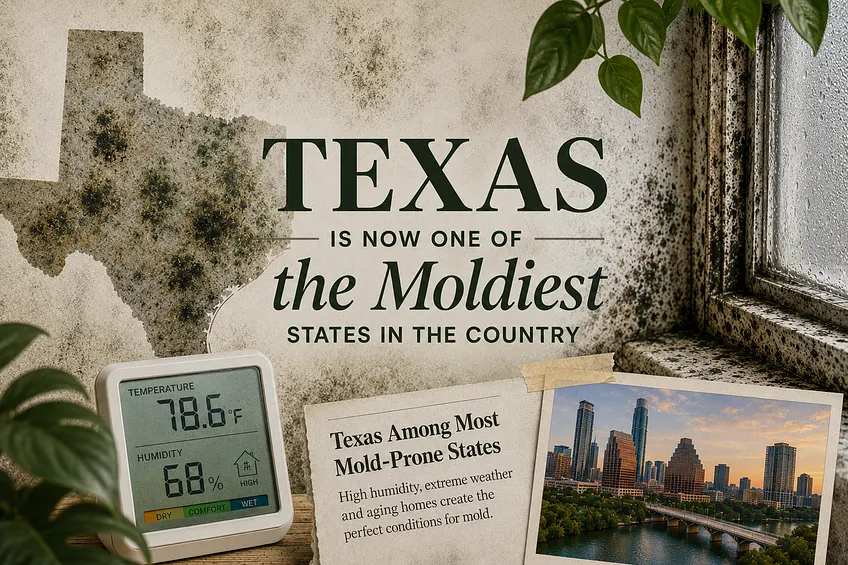
Texas just became one of the moldiest states in the country, and if you're getting ready to sell in today's Austin real estate market, that's not a headline you can ignore. I'm breaking down what's driving the spike, whether you actually need to test before you list, and what Texas law requires you to disclose to a buyer.
Why Austin Homes Are More Prone to Mold Than Ever
Between our humid climate, aging infrastructure, and a wave of newer, tightly sealed construction, Texas homes are trapping moisture in ways older, drafty houses never did. A few things I'm seeing come up again and again with my sellers:
- Central Texas humidity averages around 67%, which is more than enough to feed mold growth in the wrong conditions
- Older homes with cast iron drains and galvanized pipes are more prone to slow leaks that go undetected for months
- Newer, well-sealed homes hold in moisture instead of letting it breathe out, which can make small leaks worse over time
- Standard homeowners insurance often has real gaps when it comes to mold-related damage
Do You Need to Test for Mold Before Selling Your Austin Home?
This is the question I get the most, and the honest answer is: it depends on why you're testing. The CDC doesn't recommend mold testing for health purposes, and the EPA generally only recommends it when you have visible signs of water damage without visible mold. But real estate is a different context than a health decision. If a buyer's inspector flags moisture issues, testing can protect you and speed up the transaction rather than leaving it as an open question during negotiations.
What Texas Law Actually Requires When You Sell
Under Texas Property Code Section 5.008, sellers are required to disclose known issues, not to proactively test for mold. Where sellers get into trouble isn't mold itself, it's concealing something they already knew about. The Texas Deceptive Trade Practices Act allows for treble damages in cases of concealment, which is a big part of why I tell my clients: disclose early, disclose fully, and don't let a small issue turn into a legal one.
How I Advise Clients to Handle Mold Before Listing
My approach is the same one I use across every part of getting a home market-ready and protecting its value: catch it early, document everything, and don't guess. A few rules of thumb:
- Small, surface-level mold under about 10 square feet can typically be handled with DIY cleanup
- Anything covering 25 contiguous square feet or more should go to a licensed remediation contractor
- Professional remediation should come with a Certificate of Mold Damage Remediation, which needs to be provided to buyers for five years
- Always find and fix the water source first. Treating visible mold without solving the leak behind it just means it comes back
Mold is one small piece of a much bigger picture when you're preparing to sell in this market. If you want the full framework I use with clients on pricing, disclosures, and getting the most out of your sale in today's Austin real estate market, that's exactly what I dig into with sellers every day. And if property taxes are part of what's weighing on your decision to sell, I've also put together a full guide on protesting your Texas property taxes.
Thinking about your next move in Austin?


