


Where we’ve been: a 26.4% price drop delivered a 9.1% payment drop (Part 1). The foreclosure spike sits with a narrow group of 2022 buyers who put 3.5% down (Part 2). What pushed them was insurance, taxes, and every bill around the mortgage (Part 3). Now the finale.
Austin prices down, sales down
In October the median price fell 6.9% to $404,802 while closed sales fell 11.4% to 2,114. When demand drops that hard, price usually follows, and this month it did on paper. Unlock MLS attributes the decline to lower-priced homes making up a greater share of sales. The City of Austin median held flat at $550,000.
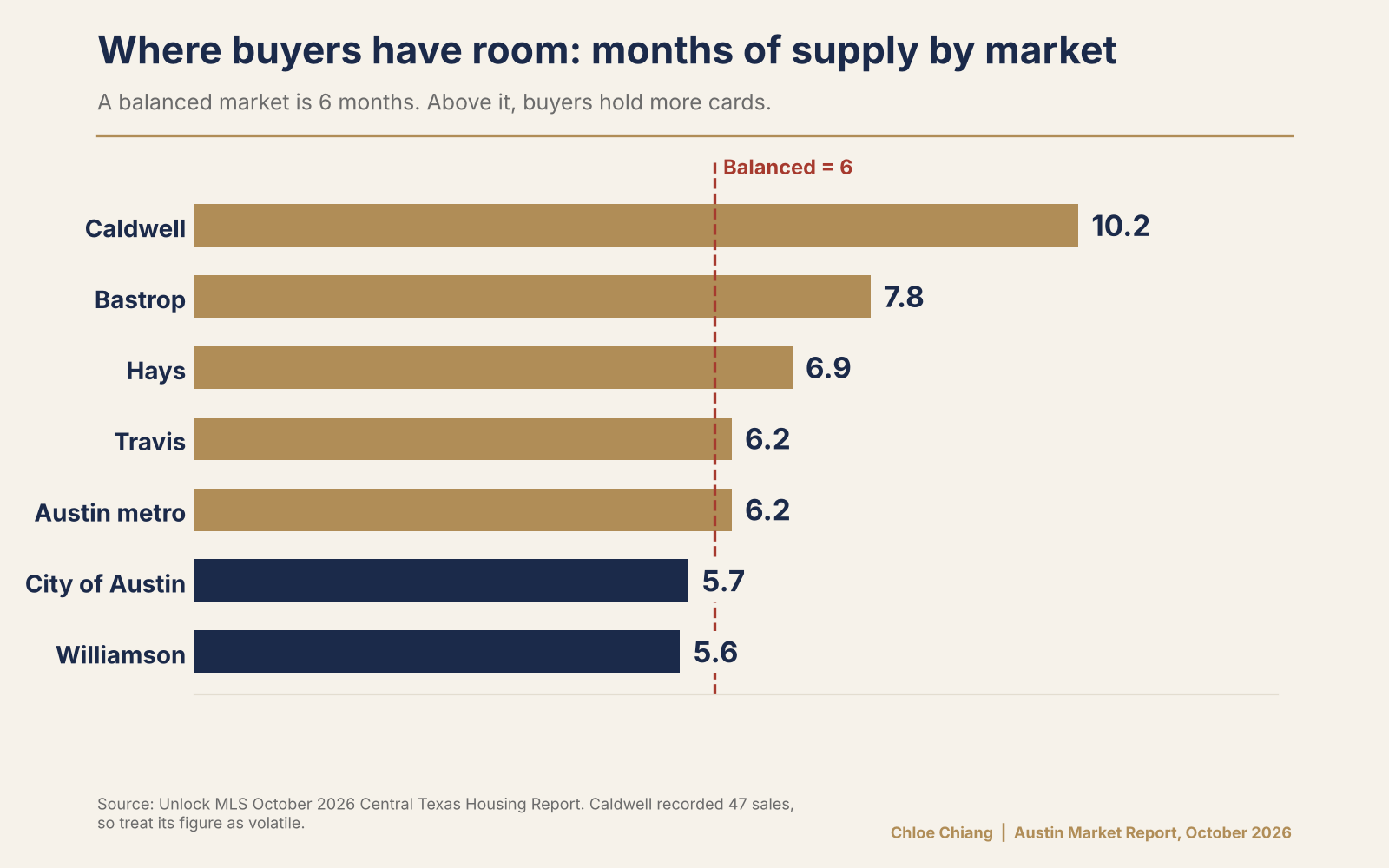
Supply dropped too. Active listings fell 2.2% and new listings fell 14.3%. Inventory reached 6.2 months, just above the balanced level of 6, because sales fell faster than listings. Fewer buyers chased fewer homes.
Roughly half of American mortgages carry a rate below 4%. Selling means giving that up and borrowing again at 7.3%. For most owners the math fails at any price, so they stay put. That lock-in is the single biggest reason new listings keep shrinking.
Frozen is the word I’d use. Sellers hold because nothing forces them to sell. Sales fall because little gets listed and few can qualify. The market is reorganizing around who can still qualify.
Renting adds to the freeze. With median rent at $2,100 and owning the median home running $700 to $900 more, many households have a reason to stay in the rental they have.
Where buyers have room
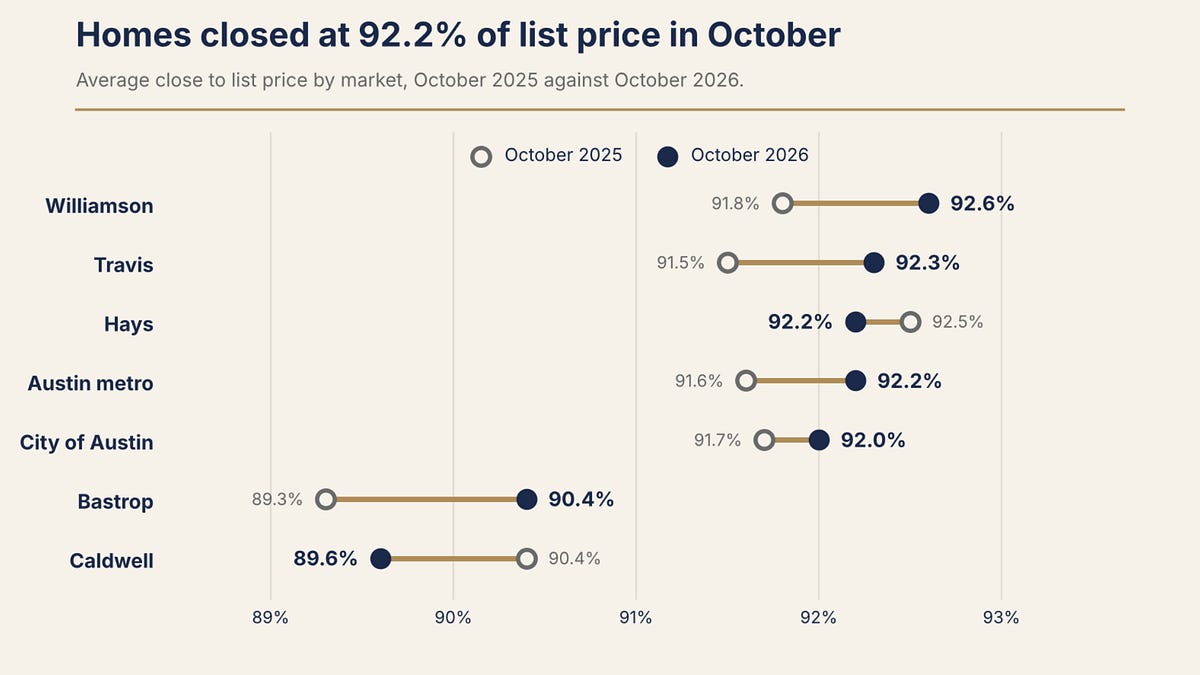
Homes closed at an average of 92.2% of list price in October. Pending resale contracts rose 6% while overall pending sales fell 4.0%, and Unlock MLS says builders’ price cuts and rate buydowns may be giving them a narrowing advantage. In mid-October, 72.17% of Austin homes sold below list price, up from 67.71% a month earlier, with only 9.18% selling above list, according to Team Price Real Estate. If you have cash or flexibility right now, you have more room to push in Hays, Bastrop and Caldwell than anywhere else in the metro. In the City of Austin, a flat median and under 6 months of supply mean sellers still hold some cards.
Closing prices sit furthest below list in Caldwell and Bastrop, and a little closer to list than a year ago in the metro overall.
Austin is growing boroughs
Every county in the region grew from 2023 to 2024. Travis grew 1.2%, and more people moved out to other counties than moved in. Births and international arrivals made up the gap. The other four counties grew because people moved there, many of them from Travis. Newcomers made up 60% of Williamson’s growth, 72% of Hays’, and 83% of both Bastrop’s and Caldwell’s.
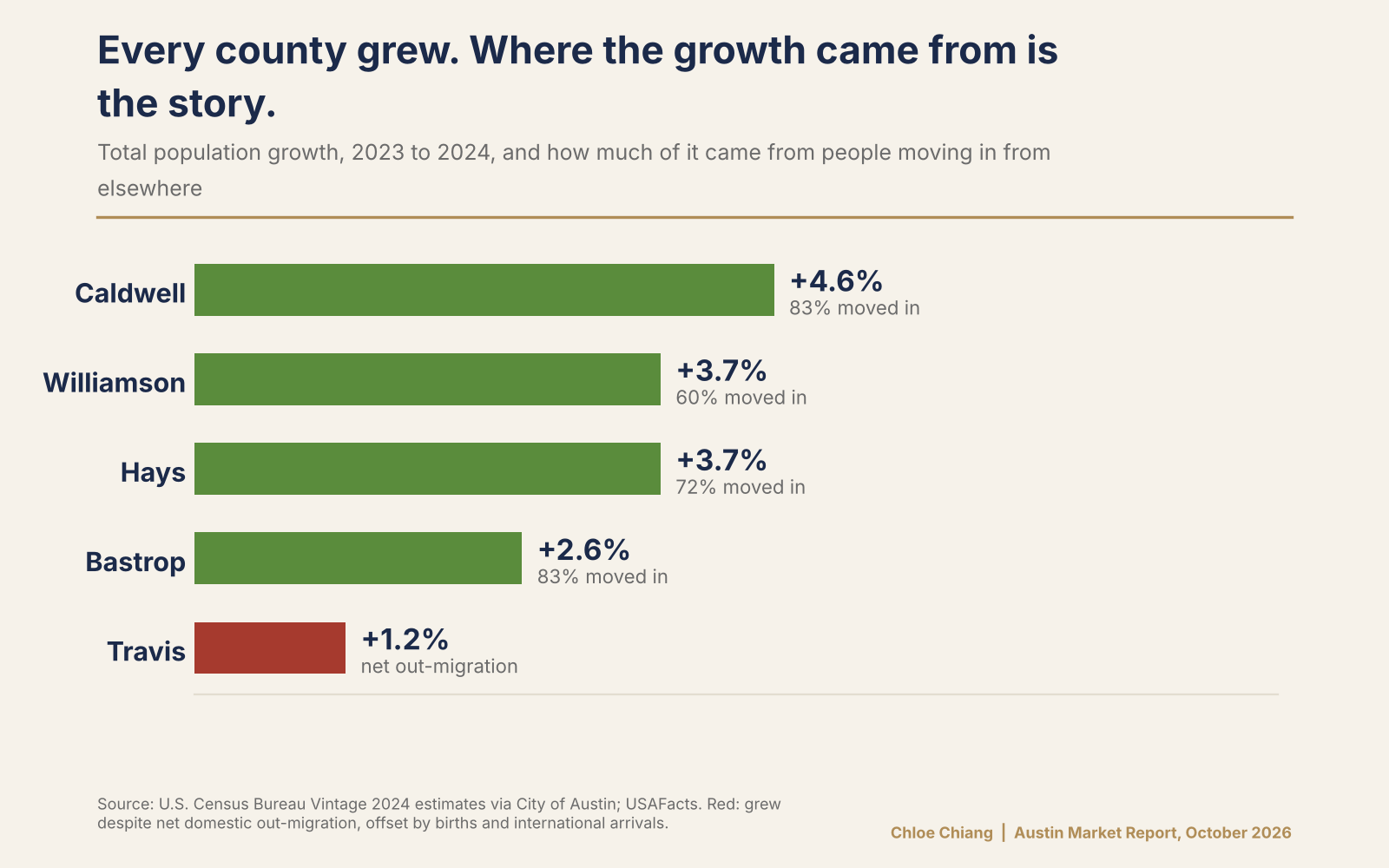
Nobody expects every New Yorker to live in Manhattan. They move to Brooklyn, to Queens, to Jersey City, and nobody calls that a collapse. Georgetown, Kyle, Buda, and San Marcos are absorbing the buyer who can’t afford Travis County anymore. Or just want a different lifestyle. Also families wanting out of AISD, an article for another time.
Builders followed. New construction made up about 27% of active listings in early 2026, nearly all of it in the suburbs. In Kyle it was 53.5%. Builders aren’t cutting sticker prices, which would hurt comparable sales across their communities. They’re buying down interest rates instead, with packages typically running $10,000 to $30,000. If you’re selling a resale home in the suburbs, that’s your competition.
What changed in November
Two things landed in the first half of this month. Both are too new to show up in the housing data yet.
First, the election. Democrats won both chambers of Congress. In Texas, Gina Hinojosa defeated Governor Greg Abbott, James Talarico won the U.S. Senate seat over Ken Paxton, and Democrats took the Texas House while Republicans kept the Texas Senate. A divided Capitol could mean property tax relief, local zoning, and school finance all become negotiated questions in the 2027 session. No housing policy has changed yet. Results are unofficial until certified.
Second, the rate outlook flipped. For most of 2026 the question was when the Fed would cut. After the October inflation report, it became how much it will raise. Futures markets now treat a quarter-point increase on December 9 as close to certain, and Dallas Fed President Lorie Logan said she sees a need for two more quarter-point hikes. I’m not going to predict where rates land. If your plan depended on them falling, that plan needs a second version.
What this means for you
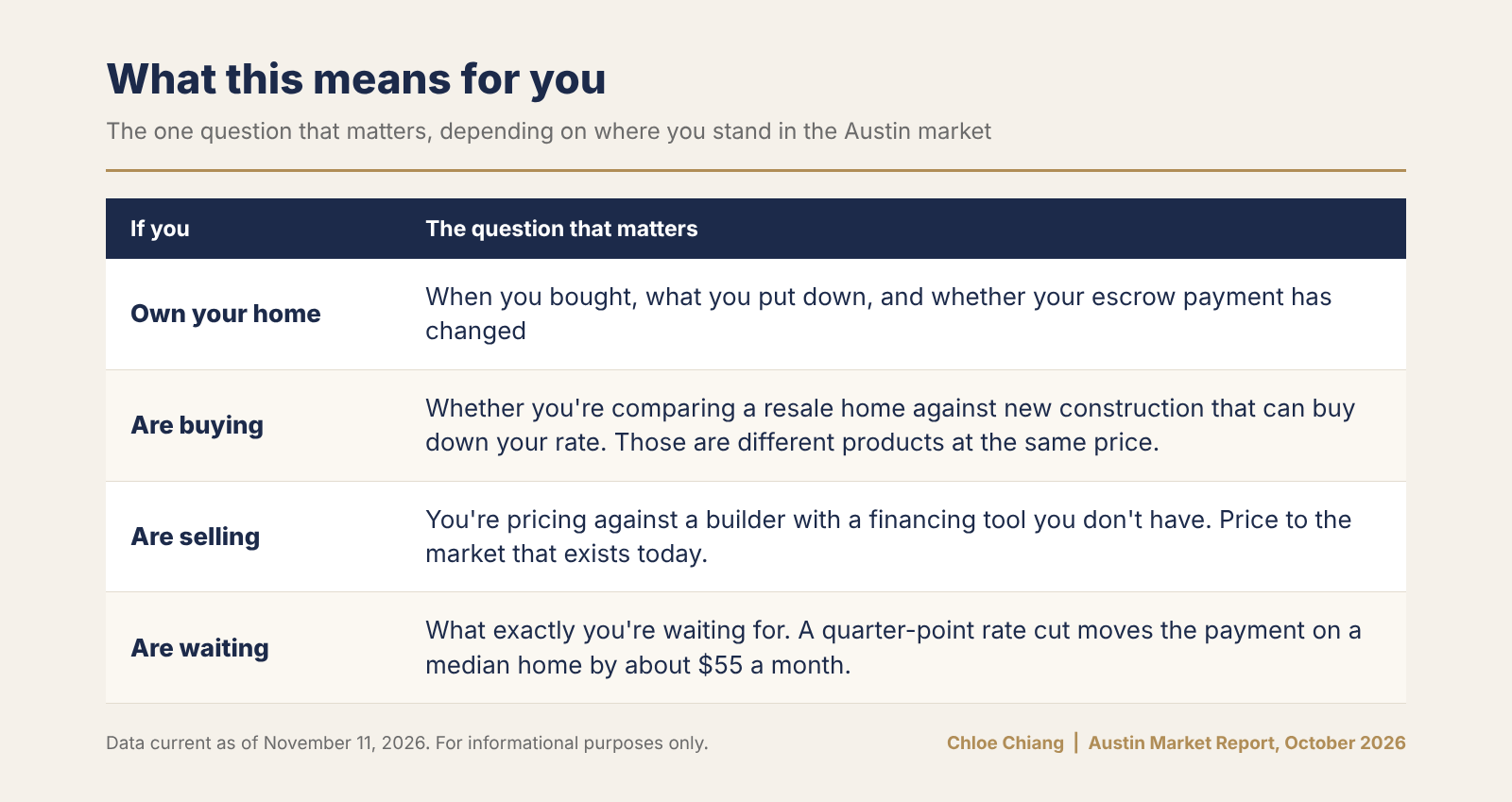
What would change my read: Austin unemployment rising meaningfully, negative equity spreading to people who bought before 2021, or delinquency climbing among conventional borrowers. None of those is visible today. All 3 are worth watching.
4 years of waiting produced a 26% discount that almost nobody could use. That’s the part I keep coming back to. The people who waited were right about prices and wrong about what it would buy them. The ones who got hurt were the families who moved first, with 3% down, right at the top.
Sources: Unlock MLS October 2026 Central Texas Housing Report; Team Price Real Estate from Austin-Area MLS; U.S. Census Bureau Vintage 2024 via City of Austin; USAFacts; Associated Press; KUT; Federal Reserve officials’ public remarks; CME FedWatch. Data current as of November 11, 2026. This series is informational and is not legal, tax, or financial advice.
Thinking about your next move in Austin?


